
Essential Hay Equipment for Missouri’s Growing Livestock Sector
12/3/2025
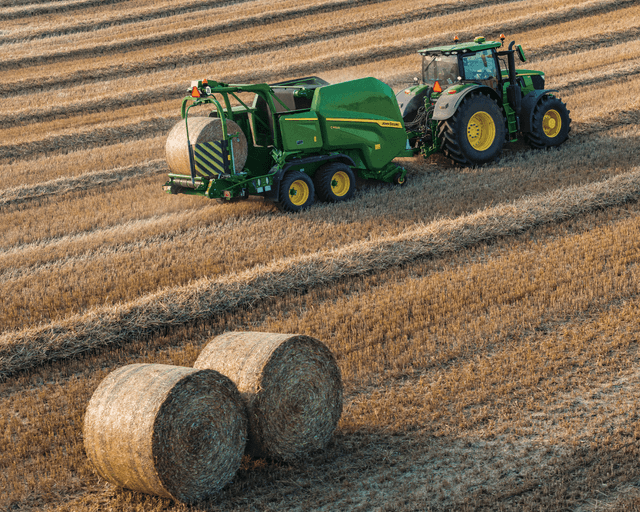
Missouri’s livestock sector is steadily expanding, with cattle operations and other diversified farms at the forefront. One of the most effective ways to support your animals and your bottom line is by producing your own feed with a well-equipped hay operation. Harvesting hay takes time and effort, but the right equipment can make the process much more efficient. To build a productive hay operation that supports your herd year-round, this is the essential hay and forage equipment you need for your Missouri farm.
Hay production in Missouri comes with its own unique challenges. Local climate conditions, forage varieties, and growing windows all affect when and how farmers should harvest hay.
Your tractor is the heart of your operation. It powers all the necessary tools and implements, including your mowers, rakes, and balers, while also transporting bales once harvest is complete. The right horsepower depends on the size of your property and the equipment you plan to use.
For smaller operations (up to 40 acres):
The John Deere 4 Series offers heavy-duty compact tractors that maneuver easily around barns and tight spaces while still packing enough power for mowing and baling.
For mid-sized operations (around 50 acres):
The John Deere 5 Series, ranging from 75–100 HP, delivers a perfect balance of strength and versatility. These tractors can efficiently handle tedding, mowing, and transporting large bales.
For large-scale operations:
The John Deere 6 Series utility tractors provide up to 250 HP for maximum productivity under the toughest field conditions. They’re ideal for long workdays and handling multiple implements with ease.
Every hay operation needs a mower to cut hay once it's ready for harvest. There are many kinds of mowers and conditioners available, designed to accommodate the needs of different farms.
Disc mowers use rotating discs to slice through hay quickly and cleanly, even in thick or uneven fields. They’re designed to handle thick hay without any clogging, making them ideal for more dense areas. They’re durable, low-maintenance, and can be attached easily via a 3-point hitch.
Humid climates, such as those in Missouri, may require longer dry-down times when harvesting hay. Mower conditioners can speed up this process by simultaneously cutting and crimping hay in a single pass, reducing dry-down up to 48 hours.
After cutting, hay often retains moisture—especially in Missouri’s humid climate. Tedding and raking help ensure proper drying and prepare forage for baling.
Tedders spread and fluff hay to speed up drying. This step is crucial in areas with heavy rainfall or limited sunny days. Tedding also helps preserve leaf quality in crops like alfalfa. However, avoid tedding overly dry hay to prevent leaf loss.
Once hay is dry, rakes gather it into uniform windrows for baling. While they don’t remove moisture, they help expose any damp spots to sunlight for final drying. Rakes improve efficiency and ensure balers can pick up material cleanly and evenly.
Once hay is baled and raked into neat windrows for collection, it’s baling time.
When it comes to selecting a baler for your feed, you’ll need to choose between a round baler or a square baler. Round balers typically create bales that are larger in size but more lightweight in volume, while square balers are smaller in size but denser.
For Missouri farms, round balers offer the best balance of efficiency, weather resistance, and labor savings, especially for smaller operations, making them the ideal choice.
Handling large, heavy bales—some weighing over 5,000 lbs—requires the right attachment. Bale spears allow you to safely lift and transport round or square bales across your property, whether moving them to storage or directly to feed pastures.
Long-term storage of bales requires extra protection, especially when stored outside. Bale wrap, or net wrap, can prevent spoilage, keeping bales intact so they can maintain quality and nutritional value when it’s time to feed.
Special Offer:
Earn extra savings with our 2026 John Deere Net Wrap Program when you sign up by December 30.
Running a successful hay operation that supports your livestock requires the right equipment that matches your farm's needs. From compact tractors, disc mowers, and balers, Sydenstricker Nobbe Partners provides quality hay and forage equipment that Missouri farmers can trust. Our reach isn’t limited to Missouri; we also proudly serve Illinois, New York, and Pennsylvania with several locations across the area. Whether you're starting a new hay operation or upgrading existing equipment, we can help you select the right John Deere machinery for your land and goals.