
Mid-Season Mower Blade Sharpening: Why Dull Blades Are the #1 Hidden Enemy of a Healthy Missouri Lawn
8/11/2026
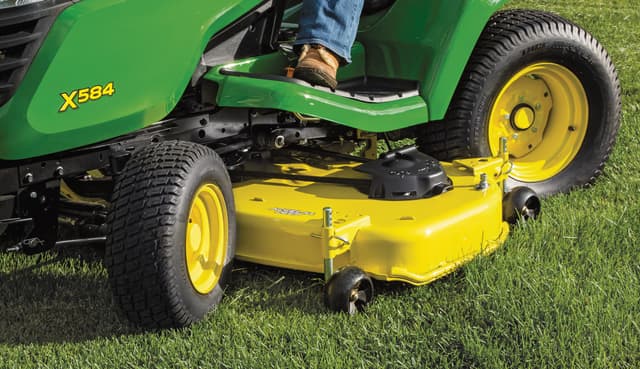
Nothing kills a mowing job like a bad blade. You can have the best mower on the market, but all the mowing, watering, and fertilizing in the world won't save a lawn cut with a dull blade. If your mower has seemed off lately, producing cuts that look more ragged than crisp, it might not be the mower itself; it’s probably what’s under the deck. Don’t let this sneaky enemy of healthy lawns catch you at peak mowing season. Learn how to identify the signs and sharpen your blades the proper way for a lawn you’ll be proud of.
A dull blade does more than leave a bad cut. It tears the grass instead of slicing it, weakening your turf and inviting bigger problems down the road.
A sharp blade slices grass in one clean motion, leaving a uniform cut. A dull blade tears it instead, leaving frayed, ragged tips that die back and give the lawn an uneven, unhealthy top layer.
When grass is torn instead of sliced, the damaged tips turn brown or gray within a day or two of mowing. What looked like a lush, green lawn can start looking tired and lifeless in a matter of days.
Ragged, torn leaf tips aren't just unsightly — they're more vulnerable. Disease pathogens find it easier to infect grass with torn tips than grass with a clean cut.
Over time, mowing with a dull blade weakens root systems. The plant has to spend extra energy recovering instead of growing, and that added strain compounds with every mow.
You don't need to guess. Your lawn and your mower both tell you when it's time, if you know what to look for.
This is usually the first clue. Yellow or brown streaking after mowing points straight to blade damage rather than a watering or fertilizing issue. Check the blade before you change your care routine.
If the lawn looks patchy or inconsistent after a normal mowing pattern, the blade is likely cutting some grass cleanly and tearing the rest. That leaves some areas taller and duller than others.
The best way to confirm it is with a visual inspection. Raise the mower on a jack and jack stands, or lower the deck, to get a clear look at the blade. Check for nicks, dents, or a visibly rounded edge, especially after running over a rock, root, or piece of debris. Any of these mean it's time to sharpen or replace the blade. A bent blade should be replaced rather than sharpened.
A few other signs worth watching for: the mower vibrating more than usual, clippings clumping instead of spreading evenly, and the engine working harder than it should just to get through the grass. Any one of these on its own can point to other issues. But together with visible damage on the lawn, they usually mean the blade is due for sharpening.
Sharpening a mower blade is a straightforward job you can do in the driveway with basic tools. Most homeowners can complete it in under half an hour.
If sharpening at home isn't an option, most local shops can turn a blade around quickly during the season. SNPartners' service departments are a good option if you're in the middle of a busy mowing stretch and can't spare the time.
Small habits between full sharpenings keep the blade working longer and the lawn looking better all season.
Don’t just check once at the start of the season. Missouri's summer growth rate can dull a blade faster than expected, especially after a stretch of rain. Soft, fast-growing grass combined with wet soil wears an edge down quicker than dry summer conditions would.
After mowing, clear any leftover clippings and debris from under the deck. Built-up grass and dirt force the blade to work against packed material, which dulls the edge faster than clean grass alone. It also adds extra weight that strains the mower's engine.
Disconnect the spark plug wire before any work near the blade. Use a floor jack and jack stands rather than tipping the mower, and always set up on a stable, flat surface before you start.
A sharp blade is one of the cheapest, fastest upgrades you can make to your mower this season. Twenty minutes of work now can save your lawn from a stressed, patchy summer. For additional guidance on blade sharpening or general mower maintenance, don’t hesitate to reach out to our team at SNPartners. We’re here to help.
Sharpen your blade after about every 25 hours of use, which works out to roughly twice a season for the average homeowner. Mow more often, or in dry, dusty conditions, and you may need to sharpen more frequently. New blades come pre-sharpened from the factory and are ready to install without extra prep.
Look for yellow or brown streaking on the lawn a day or two after mowing, an uneven or patchy cut, or visible nicks and dents on the blade itself. Extra mower vibration and clumping clippings are also common signs. Any of these mean it's time to inspect the blade.
No. Riding mowers should never be tipped fully on their side, since that can send engine oil or hydraulic fluid where it shouldn't go. Instead, raise the mower with a floor jack and secure it on jack stands, or lower the mower deck to its lowest position to access the blade.
A blade with a dent, a bend, or a chunk missing from the cutting edge should be replaced rather than sharpened. Sharpening can restore a worn edge, but it can't fix structural damage, and a bent or cracked blade is a safety risk once the mower is running.