What Equipment Does a Horse Farm Need? A Chore-by-Chore Guide
10/28/2026
Most horse properties run on one compact tractor with a front-end loader and a few implements matched to the work. That means a rotary cutter for pasture, a manure spreader, and an arena drag. As you add horses, acres, or boarders, a utility vehicle and a second machine start to earn their keep.
Horses take a lot of work, and much of it happens outside the barn. The right equipment won’t do the chores for you, but it can turn a long afternoon into a quick hour. That leaves more time to ride, train, or just enjoy your horses. Here’s everything you need to knock out your chores in no time.
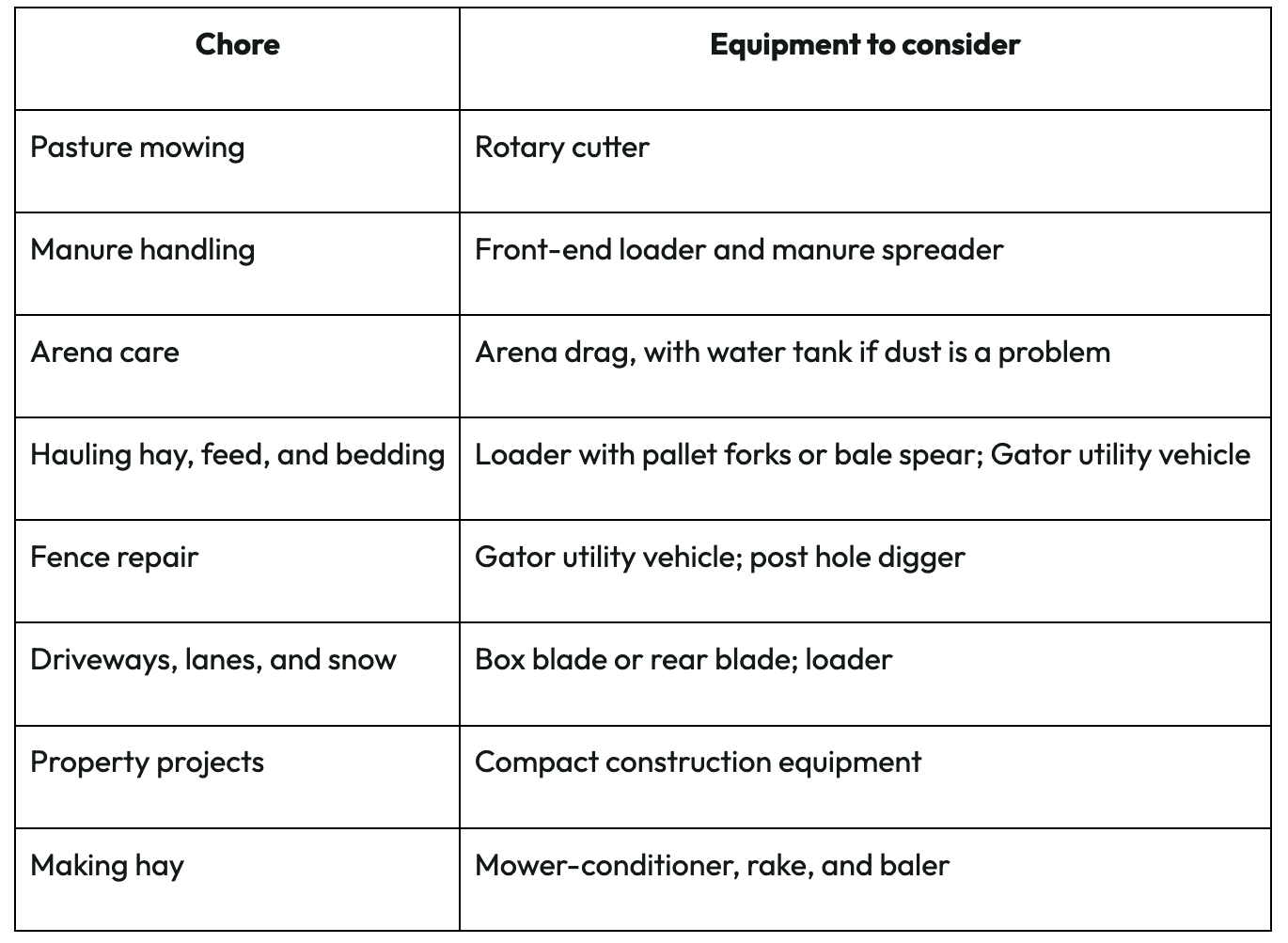
Before you even start looking at tractor specs, you need to get clear on what actually needs to be done. That will help you make the best decisions. Before you shop, write down every job your property asks of you in a normal week. Then add the jobs that show up in mud season and after a snowstorm. For most horse owners, that list looks like this:
Each of those jobs points to a piece of equipment. Luckily, most of them hook to the same tractor.
Horses are picky grazers. They chew their favorite spots down to the dirt and let the rest grow tall and go to seed. Mowing those rough patches with a rotary cutter keeps weeds down and helps the whole pasture regrow evenly. It also makes pastures easier to walk and check for hazards. Pasture care can be an ongoing project. How often you mow depends on your herd, your grass, and the weather. Plan for several passes through the growing season, with extra trips after a wet stretch.
A front-end loader and a manure spreader handle most of the manure work on a horse property. The loader piles and loads, and the spreader puts it back on your land as fertilizer. One horse makes more manure than most new owners expect. Penn State Extension puts it at about 51 pounds a day for a 1,000-pound horse. That’s more than a wheelbarrow can handle.
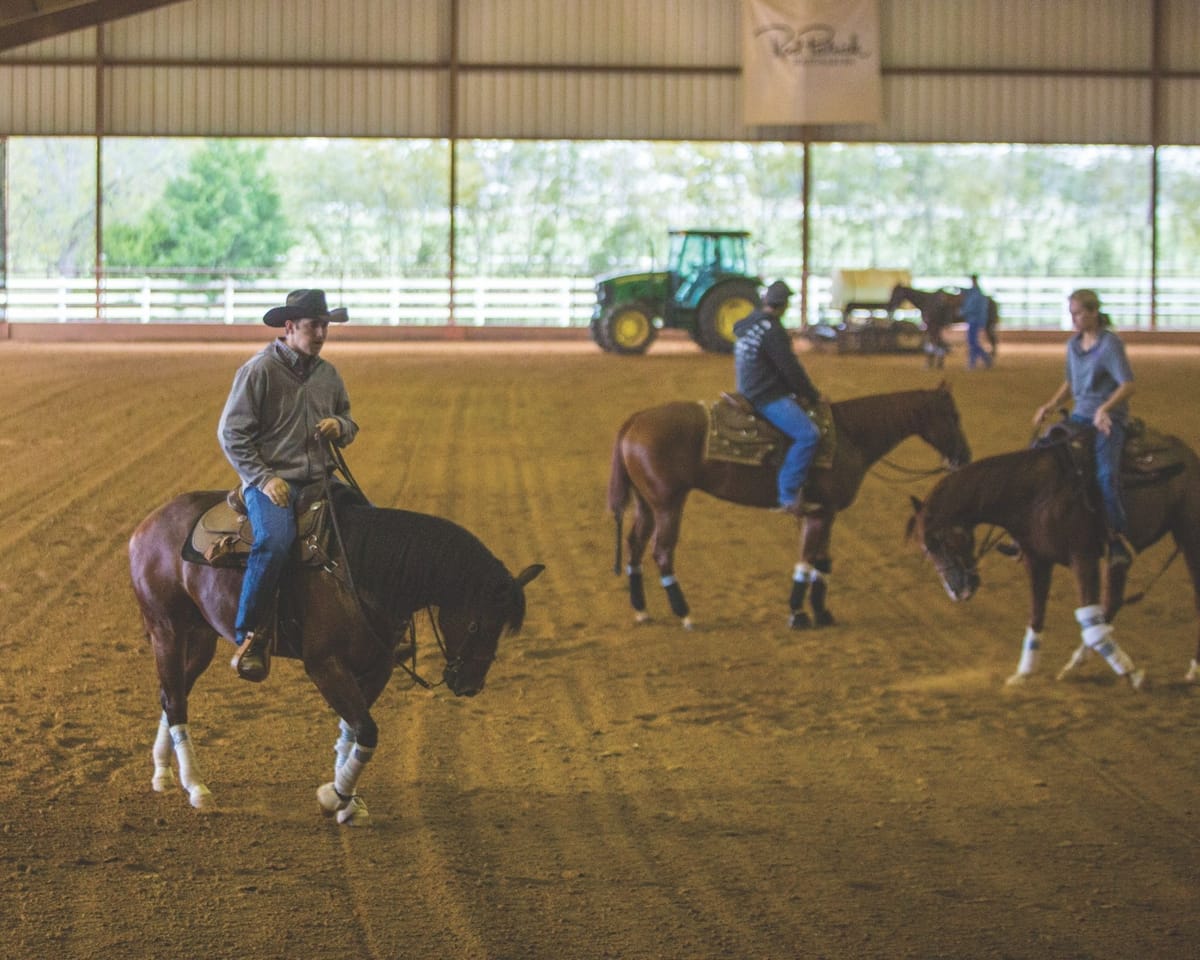
A tractor or utility vehicle pulls an arena drag to keep footing level, firm, and safe for horses and riders. Uneven footing can cause slips and put extra strain on legs.
How often you drag depends on use. A backyard arena might need dragging once a week. A boarding barn or show arena can need it several times a day. Some drags carry a water tank so that you can knock down dust in the same pass.
Match the drag to your footing and to the machine that will pull it. A drag that’s too heavy for a small tractor won’t do a clean job.
A loader with pallet forks or a bale spear moves heavy loads, while a utility vehicle handles daily runs. Hay, grain, and bedding add up to a lot of lifting over a year.
With a loader, you can move hay and bagged bedding in one trip instead of ten. A bale spear makes quick work of round bales, and pallet forks handle stacked feed and bedding. For daily feed runs, a Gator utility vehicle is quicker to hop on and fits through gates and barn aisles.
A utility vehicle and a box blade or rear blade handle most work outside the barn and arena. That includes fences, driveways, and lanes, plus whatever winter throws at you.
A Gator carries posts, wire, and tools down the fence line, so repairs take one trip. It also speeds up daily fence checks, which matters when a loose board can turn into a loose horse.
Horse properties take a beating in mud season. Hooves and trailers churn up lanes and gateways fast. A box blade or rear blade fills ruts and keeps lanes open, and the same tractor can push snow once winter sets in. Fall is a good time to get this equipment ready, before the ground freezes.
The more horses and acres you manage, the less one tractor can cover. Your equipment list should grow with your operation.
With two or three horses, one compact tractor and a handful of implements usually cover the work. A utility vehicle is a nice extra, not a must.
Boarders expect clean stalls, groomed arenas, and fed horses every day. When one tractor is dragging the arena, another machine has to be free for manure or hay. That’s when a second tractor or a utility vehicle pays for itself.
Bigger projects bring in bigger equipment. Compact construction equipment can help with drainage work, new paddocks, or arena construction.
Many horse operations grow and bale their own hay. If that’s you, add a mower-conditioner, rake, and baler to the list. Browse our hay equipment to see what fits your acreage.
If you belong to an equine association, you may qualify for John Deere equipment savings through NTRA Advantage. Call before you buy so the discount applies at purchase. Ask our team which equipment qualifies.
It depends on what you’ll lift and pull. Start with your heaviest job, like moving round bales or running a PTO spreader, and size from there. Measure your gates and barn aisles too, since a tractor that won’t fit where you work won’t help. Your dealer can match horsepower to your implements.
If you have more than a horse or two and some pasture, a spreader saves hours every week. It turns a growing pile into fertilizer you can put back on your fields. If you have little land, hauling manure off the property may work better. Check your state and local rules either way.
It depends on how much you use the arena. A home arena may only need dragging once a week. A busy boarding or show arena can need it several times a day. Drag more often after heavy rain or long riding days to keep the footing even and safe.
For light work, sometimes. A utility vehicle handles feed runs, fence checks, and small ground-driven spreaders or drags. Most can’t run a loader or PTO-driven implements, so owners with pasture to mow or heavy loads to move still need a tractor. Many barns use both.
Tell us about your property, your herd, and your chore list. The SNPartners team can help you match a tractor, implements, and a utility vehicle to the work you actually do. Stop by a location near you or contact us to get started.