
What to Do When Your Tractor or Combine Breaks Down Mid-Field
10/2/2026
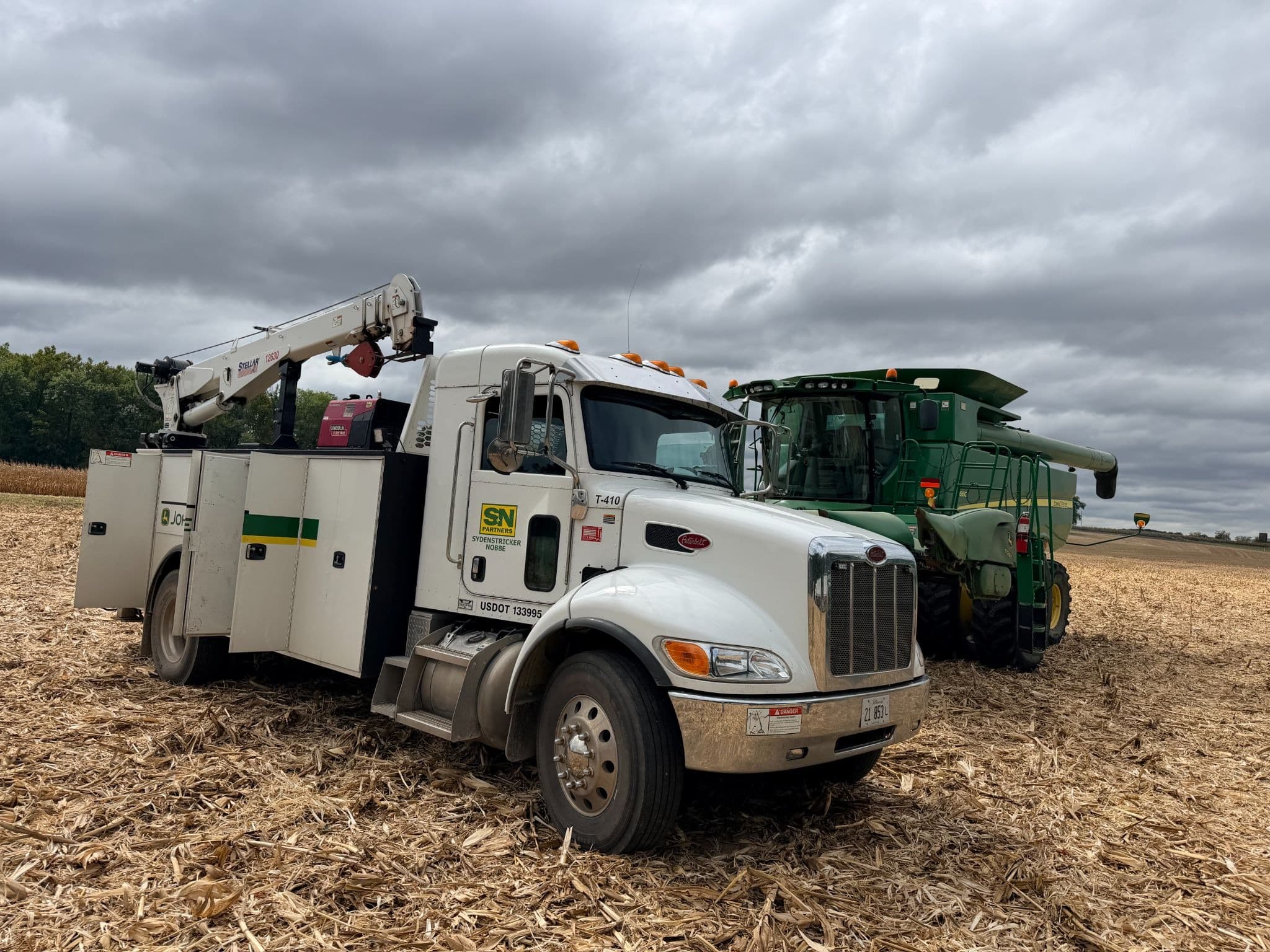
If your tractor or combine breaks down in the field, stop and shut it down safely first. Do a quick visual check before you touch anything. Write down what happened, then call your SNPartners service team. We'll help you figure out next steps and get parts or a technician moving.
Nothing stalls a harvest day like a breakdown out in the middle of the field. One minute you're moving through the crop. The next, you're sitting still with no shop and no parts counter in sight. Don’t panic; this can happen to any equipment, even well-maintained machines. A hose can fail. A belt can snap. Dust and heat can push a good engine past its limit during a long harvest run. It's not a sign you did something wrong. It's just part of running equipment hard during the busiest weeks of the year.
Here's what to do so you can handle it safely and get back to work as fast as possible.
Start by bringing the machine to a safe stop, off the direct path of other equipment if you can manage it. Set the park brake. Shut off the engine and pull the key. This keeps anyone from bumping a switch and restarting the machine while you're working near it.
Lower or block any raised attachments before you get close. A header, a bucket, or any hydraulic component can drop unexpectedly if it's still under pressure. Heavy rotating parts like blades and flywheels can keep spinning for a couple of minutes after shutdown, so give them time to stop completely. If you're stopped near a road, turn on your hazard lights so other drivers can see you.
Once the machine is secure, take a look around it. Don't touch anything that's still moving or under pressure. Check the obvious spots first: engine oil, coolant, and hydraulic fluid levels. Low fluid or a fresh leak is one of the most common reasons a machine quits in the field.
Look underneath for drips or wet spots, but keep your hands away from any hydraulic line. Fluid escaping under high pressure can pierce skin and cause a serious injury, even from a pinhole leak. If you see or smell something unusual, like smoke, burning, or grinding metal, don't try to fix it yourself. Just note it and step back.
Before you call for help, jot down what you noticed. Write the machine's model and hours, what you were doing when it happened, and any warning lights or codes on the display. A quick photo from a safe distance can save time once you're talking with a technician. The more detail you can hand off, the faster your dealer can figure out what's needed.
From there, call your local SNPartners service department and walk them through what you found. Our team can help you sort out whether the fix is something quick or something that needs a technician on site. Once we know what's needed, we'll get the right parts moving.
A lot of mid-field breakdowns trace back to something that could have been caught earlier. Building a few habits into your routine goes a long way toward keeping you out of the field-repair situation altogether.
Catching a small issue early means a planned repair on your schedule, not an emergency one on the machine's. That's worth the extra few minutes at the start of each day.
Skipping these checks adds up with lost productivity and emergency repairs, on top of the stress of a mid-field breakdown.
A breakdown is stressful enough without wondering who's going to answer the phone. That's where having the right dealer behind you makes the difference.
SNPartners' service department serves customers across Missouri, Illinois, Pennsylvania, and New York, with technicians who know John Deere equipment inside and out.
Breakdowns happen to every operation eventually. What matters is having a plan and a dealer you can count on when it does. Keep this checklist handy, and know that the SNPartners service team is ready to help you get back in the field.
Stop the machine safely, set the park brake, shut off the engine, and pull the key. Wait for any moving parts to fully stop before you get close. Then do a visual check for fluid leaks or damage before calling for help.
It's best not to. A small leak often points to a bigger problem, and running a machine low on fluid can cause serious engine or hydraulic damage. Shut it down, note what you see, and call your SNP service team before you put it back to work.
A quick daily walk-around catches most problems early. Check fluid levels, belts, and filters before you start each day. Give the machine a closer look at the first sign of unusual noise, smell, or performance.