
Why You Should Raise Your John Deere Mower Height this Summer, and How to Do It Right
8/11/2026
Summer heat puts extra stress on lawns, which requires you to switch up your routine a bit. Mowing habits that worked in the spring can do more harm than good in July or August. The good news is all it takes is a simple fix: raising your mower deck height 1/2 to 1 inch above your normal setting in peak heat. In this post, we’ll cover why this method works, ideal heights by grass type, and how to actually adjust a John Deere mower for the best results this summer.
Raising your cutting height isn't simply for aesthetics. It changes how well your lawn handles heat, drought, and weed pressure.
Longer grass blades act as a canopy for the soil, protecting it from the overheating that stresses your lawn's roots. Shorter blades also mean less canopy, so soil dries out faster. A taller cut reduces evaporation and helps your lawn hold onto moisture during hot, dry stretches.
Grass blades are how the plant makes energy through photosynthesis. Cut too much off at once and you limit that energy supply right when the plant needs it most. As a rule, never remove more than 1/3 of the blade length in a single mow. If your grass gets away from you, bring it down gradually over two or three cuts instead of scalping it in one pass.
A taller cutting height helps grass establish deeper roots, which reach moisture further down in the soil during drought. That's crucial once temperatures start climbing into triple digits.
A taller, denser canopy blocks the sunlight that weed seeds like crabgrass need to germinate. University of Missouri Extension research has found a direct link between mowing below 3.5 inches and increased weed pressure in tall fescue and Kentucky bluegrass lawns. Mow high, and you're doing weed control without another trip to the shed for a sprayer.
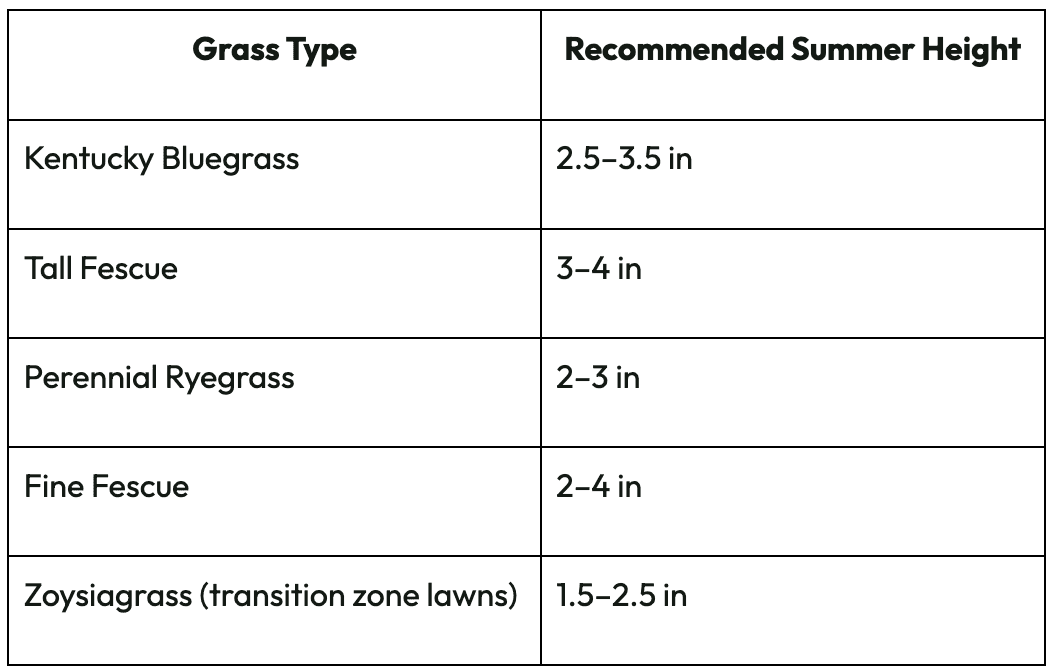
The right height depends on which grass you're growing. Here's where to set your deck for the turf types most common across SNPartners' service area:
Aim for the higher end of your grass type's range in summer, and stick to the 1/3 rule no matter what height you land on.
Once you know your target height, adjusting your deck takes just a few minutes.
Set your mower on flat, level ground, shut off the engine, remove the key, and set the parking brake before you touch the deck. Never adjust height with the engine running or on a slope.
Uneven tire pressure tilts the whole mower, which throws off your cutting height even if the deck setting is correct. Check that pressure matches on both sides before you adjust anything.
Most John Deere riding mowers use a deck lift lever or height adjustment knob near the operator's seat or fender. Raise the deck fully, then set the lever or knob to the notch matching your target height. Exact lever placement varies by model, so check your operator's manual if you're not sure where yours is.
Once the deck is set, measure from the ground to the blade tip, not the deck housing, to confirm the actual cutting height. If the gauge wheels are touching the ground, raise them until they clear.
A few minutes of adjustment now can save you a summer of stressed, weedy turf. If you have questions about your specific model or need a hand dialing in your deck, stop by your local SNPartners location and we'll walk you through it.
Raise your mower deck 1/2 to 1 inch above your normal setting during the hottest months. The exact height still depends on your grass type, but aim for the higher end of your grass's recommended range once temperatures climb.
Cutting too short removes too much of the leaf blade, limiting the grass's ability to make energy through photosynthesis. This weakens roots, increases moisture loss, and leaves your lawn more vulnerable to heat stress, drought, and weeds.
Kentucky bluegrass does best mowed at 2.5 to 3.5 inches in summer. Staying on the higher end of that range helps shade the soil and supports deeper root growth during hot, dry stretches.
Park on level ground, shut off the engine, and set the parking brake. Raise the deck fully, then set the height lever or knob to your target notch. Verify the actual cutting height with a ruler, measuring from the ground to the blade tip.